How much does it cost to write and publish a book?
Committing to a book is a big deal, and you want to write your best book – that much is clear. But if you want your book to have an impact and be a strategic asset, you’ll need to invest in it. So how much does it actually cost to write and publish a book?
Let’s go through the key steps of creating a book – from idea to launch and leverage – and what some typical investments might be. We’re focusing on the self-publishing journey (or using a pay-to-play publisher), however the first few stages – planning, writing, getting feedback – are basically the same whether you’re doing it yourself or aiming for a deal with a traditional publisher.
Before we jump in, we’ll show a few of our cards. There are other blogs out there who can show you how to write a book in a month. That’s not us. At Intelligent Ink, we do things to the highest possible standard – and usually, that’s not the fastest or the cheapest route. Our focus is on helping you create the best possible book, whatever that looks like.
With that in mind, the figures we include are ballparks so you can run some back-of-the-envelope calculations – a good place to start your planning for a quality book that you’re proud to call your own.
Stage 1: Creating a Book Plan
You’ve got the idea. How do you make it real?
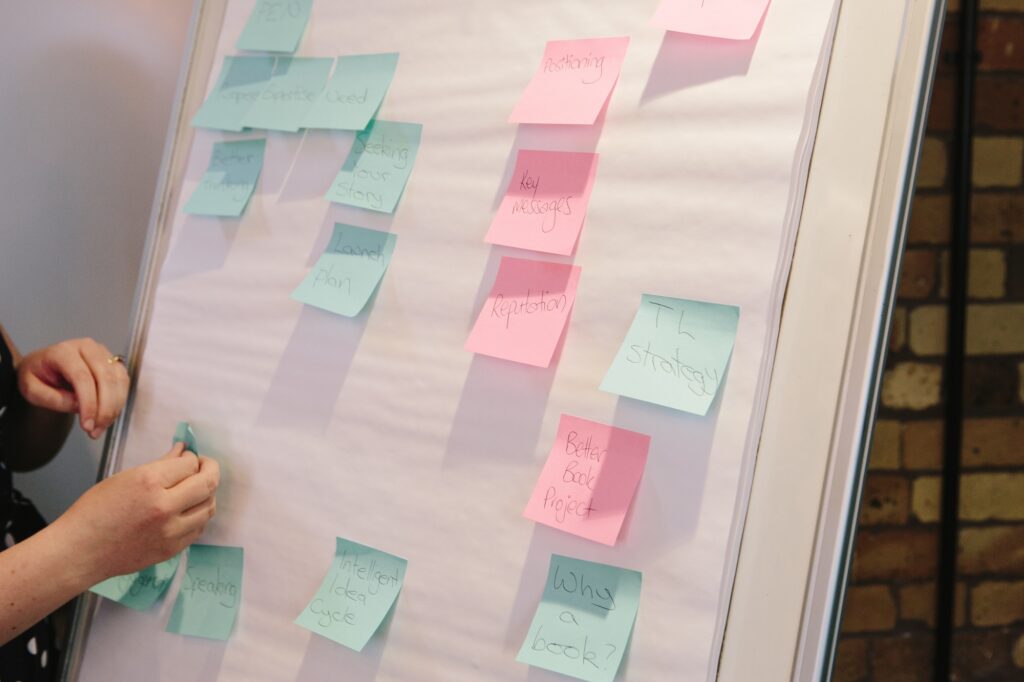
The first phase of any good thought leadership book is getting clear on your strategy and structure. The planning stage involves a bit of sweat equity: you’re deciding what impact you want to have, and how you want to make that happen. You’re choosing the big idea that you want to talk about, and what key messages you need to cover to persuade people that you’re on the right track. You also need to get an idea of what others are saying, and how you’ll contribute to the wider conversation.
A good blueprint will also help you shape what each chapter will look like, your tone of voice and style, and what existing material you have that can be utilised.
There are also other aspects you need to consider at this point, like how and where you want to publish (online, in print, as a course…) but we’ll cover that later.
By the end of the planning phase, you should know how you’ll strategically position, structure, and share your book with the world.
Investment: $4,200 for a one-on-one workshop and blueprint, or $1,200 to do it in a group – find out more about the Better Book Blueprint here.
Stage 2: Writing a Book

The longest part of any book writing project is the writing itself. You’ll be collating your existing work, researching and fact-checking, conducting interviews, securing permissions, and, most importantly, putting words to the page.
You can go one of four ways here.
1. Do it yourself
Some people love to write. They love the process of crafting their ideas, the deep thinking time, wrestling with word choices to make a sentence land just right, zooming out to see how a chapter feels – all of it can be very appealing.
Investment: For the writing itself, it’s just about the time you’re going to spend on it – and we’d expect you to take something in the range of 250-500 hours, depending on the size and nature of your book. Keep in mind that there are many common traps that those going DIY get caught in along the journey which often end in a tangled, unfinished draft – so while you COULD go it alone, we wouldn’t recommend it.
2. Join a book incubator
In our experience, there are three core things that you really need in order to not only have an amazing book, but also to have a good time along the way.
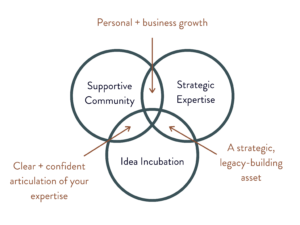
A supportive community, strategic expertise, and robust development of your ideas (which we also like to call idea incubation).
Combining the community with our strategic expertise in both books and thought leadership gives you a journey rich in personal and business growth. While the coaching of ideas you get, combined with the perspectives of other smart people in the community, enable you to achieve the clear and confident articulation of your expertise. We’ve seen clients open doors for themselves before their books are even finished and launched simply because of this shift.
When you do that alongside deep expertise in books and strategic expertise in thought leadership, you get a book that truly has impact – not only for readers, but for your business too. Something that you can leverage and are proud to have as a part of your legacy.
We’ve seen the game-changing nature of doing a book in this way. That’s why we’ve designed the Better Book Project – an intimate small group book coaching programme designed to help you write your best book, and enjoy the process.
Investment: From $950/month (if committing for 12 months) – book a free strategy session with Verity to chat about the best timeline and option for you.
3. Work with a book coach
The second way is to have a one-on-one book coach, like one of our Inkers, who will act as your literary personal trainer. You’ll still be in charge of writing the text, but you’ll have one-on-one guidance, support, partnership, and feedback on hand through the whole experience. Generally this kind of set-up includes some editing support, but it will depend on your individual Ts & Cs.
Investment: Varies depending on how much you’re writing/wanting feedback on each month, but for coaching and editing, we suggest allowing between $30,000 and $45,000 spread across an approximately year-long project. (Depending on the size of your book, and how much you’ve already written, expect the figure and timeframe to flex.)
4. Use a ghostwriter
If you’re time poor or don’t rate your writing skills, a great option is to work with a book ghostwriter, like one of our talented team. Through a series of regular interviews and coaching sessions, a ghostwriter will help you capture and develop your thinking and stories, then write a book that’s going to be powerful for your readers – and a legacy for you. It’s still your thinking and ideas (made better through some healthy challenge), committed to paper by someone who knows how to make you sound like the best version of yourself on the page.
Investment: We’d suggest allowing $60,000–$75,000 for ghostwriting, again depending on the scope and nature of your book.
Stage 3: Book Editing

Editing and feedback – some people’s favourite part, and a nightmare for others.
Feedback first. Although you know that your book is good, it’s important to get other sets of eyes on it to make sure it makes sense to your industry peers, and others whose opinions you value. It’s important to seek out objective, honest feedback – remember that a challenge is far more beneficial to your work than a compliment!
Taking feedback on board requires bravery and objectivity, but ultimately it’s the best way to know that your book is going to land – and to help you find anything that’s been in your writerly blind spot up until now.
Editorial review
The first stage we would recommend, which comes when you have what we call a “holey cheese draft” (basically a draft that has most of the pieces in place but has A LOT of holes and is pretty messy) is an Editorial Review. This is designed to give you direction for how to turn your “holey cheese draft” into a compelling manuscript that actually has an impact on the reader. It involves feedback on the structure, style, and content, and provides actionable feedback on how to make those improvements.
Investment: $2,400+GST (note that if you’re part of the Better Book Project, you’ll already have these included!)
Editing
There are usually three stages of editing: developmental edit, line edit, and proofreading.
A developmental edit ensures that your manuscript is clear, engaging, and the best possible communication of your ideas to your readers. Starting with the widest lens, this is where you’re looking at the order and flow of your ideas, whether your main argument is coming through clearly, and where you need more research or material to back up what you’re saying.
A copyedit, or line edit is where your manuscript is edited a sentence at a time so that it reads as smoothly as possible. A good line edit will consider things like language, consistency, phrasing, rhythm, and grammar. Some line edits will also include fact-checking and referencing support.
And finally, your proofread is where you get your manuscript ready for typeset and print. That means combing for every mark of punctuation, and what words could be changed to make your writing more persuasive and effective.
Investment: This can vary hugely, but for a great editor, allow $5,000 – $10,000 for all three stages of editing combined. If you’re working with a professional ghostwriter for the previous stage, then that should include the bulk of your editing too.
Stage 4: Publishing
Early on, we touched on the different paths for book publishing: Self-publishing, traditional publishing, or a hybrid/pay-to-play option.
You’ll want to decide what path you want to take in the beginning stages of your writing and planning journey, since it affects how this stage (and to a certain extent, the previous stage) functions.
Traditional publishing
Working with a traditional publisher gives you a stamp of legitimacy. However, the drawbacks are:
- royalties are low
- it’s often hard to get a deal
- you have very little control over the latter stages of the process
- it takes a lot longer (sometimes 2+ years after you submit your manuscript!)
Investment: Sometimes none (you may even be paid an advance), but some publishers may expect you to buy a certain number of books (around 2,000). Note that you also make less off each copy of the book.
Self-publishing
Self-publish, and it’s your project, and you have total control over every aspect – with the responsibility also falling on your shoulders. If you are self-publishing, you’ll want to make sure that your book looks and feels right on the shelf, in people’s hands, and on e-readers (this is true for other publishing routes too, but you don’t have to organise it!). So you’ll need to invest in a good cover designer and typesetter (that’s the inside layout). You’ll also need to organise your ISBN (International Standard Business Number), get it up on Amazon or Ingram Spark, set it up for your own distribution and sort all your marketing and publicity.
This can be a great option for those who are using their book to grow their business, but it does take some time and effort on your part. If you join the Better Book Project or work with us one-on-one, we’ll guide you through this process.
Investment: For self-publishing, we would recommend between $5,000 and $10,000 for the total self-publishing process, including design, admin, and some print.
Hybrid publishing
Hybrid publishing is the third option, where you share costs and design decisions with an established brand that specialises in this kind of publishing. They can usually do everything that a traditional publisher does but you pay-to-play. They’ll also help you launch and leverage your book to an extent – but more on that in the last section. Hybrid publishing can be a great option for those who want a professional book and want to get it into bookstores, especially if you’re time poor.
Investment: Usually anywhere between $15,000 and $25,000 depending on the publisher and type of book. Feel free to reach out if you need recommendations!
Stage 5: Launch and leverage
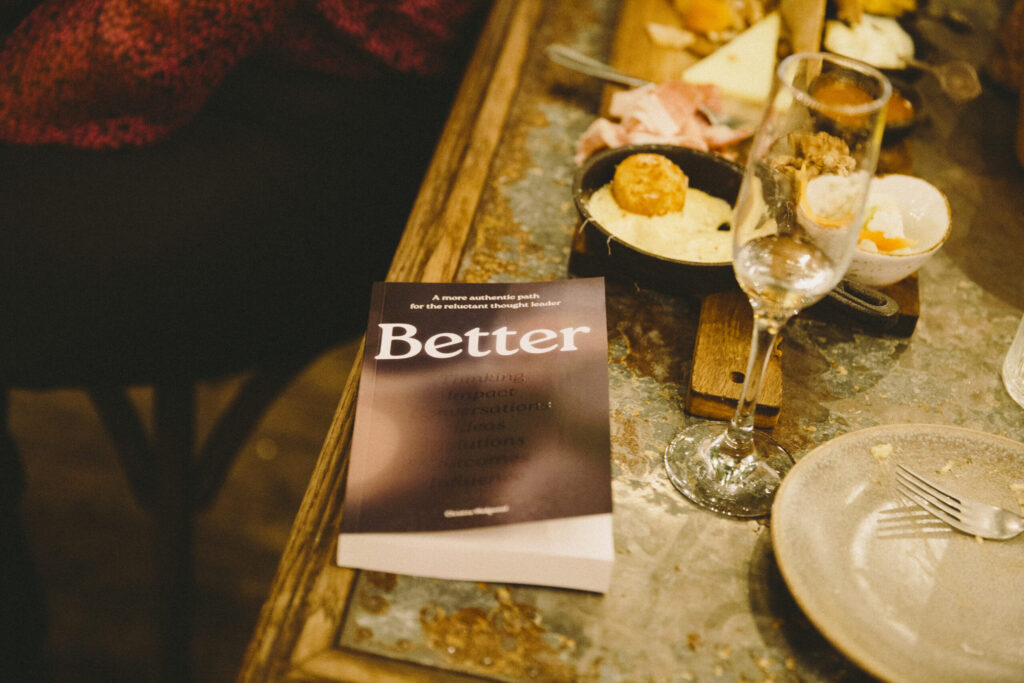
Congratulations – you’re a published author! Now let’s get your book out there into the world.
Launching and leveraging your book ensures that it hits the world with a bang, and that you can get the most mileage out of it to support the vision you set out at the start of the journey.
The launch event can be as big or small as you’d like, and we have had book clients forgo the party to instead focus their energy on outreach and marketing, which is where they’ve built long-term engagement for long-term sales.
We recommend a strategic approach to introducing your book to its target audience and then maximising its impact. That means reassessing your vision and goals (including ideal sales, reviews, media features, and opportunities you’d like it to create), building some tactics around those goals, and getting the right support together. If you’re part of the Better Book Project, we’ll help you do just that, so that you’ve got a meaningful strategy and tactics to take you forward – but we will also introduce you to marketing experts who are specialists in helping bring a book to market.
You’ll need to update your website and social profiles, and give energy to your community through long-term email series, digital marketing funnels, using the book for client outreach, speaking opportunities, workshops, content repurposing, partnerships, awards, and exploring different formats like audiobooks and ebooks.
Investment: There’s a lot that can go on here, so we’ve broken it down to a few common a la carte items. Note that you can do as much or as little as you want here – we can help you work out what you actually need!
Book launch marketing strategy/implementation: $5,000 – $10,000
Publicity: $3,000 – $7,000
Full author platform (i.e. website, digital marketing funnel set up etc.): $7,000 – $10,000
Paid ads: $500 – $1000/month
So how much does it cost to write and publish a book?
Let’s sum it up. Even if you do everything possible yourself – including the editing, which we recommend you outsource – then the smallest figure you’re going to encounter for your book is in the design and publishing, coming in around $5,000.
A more realistic figure for those doing The Better Book Project (depending on how you publish) is somewhere in the range of $15,000–$30,000 total.
Now, an honest truth: You will not make that money back just by selling your book. You’d need to sell tens of thousands of copies before you’d break even, and that’s a privilege that only the top echelons of authors get. We’d all love to be there, but that’s some time away.
Instead, the benefit of your book is in how you leverage it and build your profile. If you secure more clients, high-value speaking gigs, workshop attendees, and leads then that’s where the book pays dividends.
That’s why we think about a book as part of a strategic thought leadership approach. Not only will your thinking have grown in the process of developing your ideas and writing them, but you’ll also be able to turn those ideas – and your recognition in the market as a leader – to your advantage.
Get in touch if you’re keen to explore how you can write your best book.