Is a great book born or moulded?
The case for why every author should create a great book in the style of Cézanne
There’s an old Malcolm Gladwell “Revisionist History” podcast episode that I still dust off when people ask me what writing a book is really like. He breaks down two primary approaches to creative development: Are you a Picasso or a Cézanne?
Picasso creatives are the ‘wait for lighting to strike’ types. Picasso was famous for producing some of his most incredible works in a single sitting. He’d think and muse and procrastinate, but then when he sat in front of his canvas (or so the legend goes), he’d whip up something rather spectacular in a burst of genius.
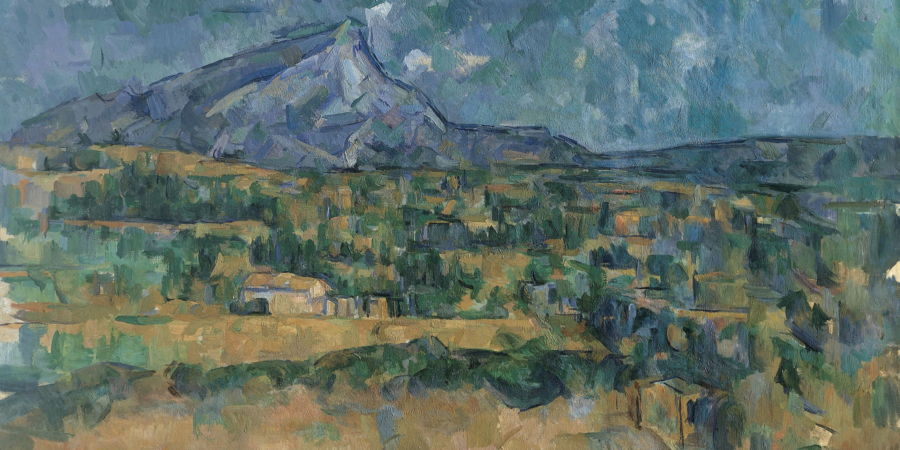
Cézanne creatives, on the other hand, are iterative. Paul Cézanne apparently would re-paint the same portrait a hundred times, each version evolving ever so slightly. He never thought his work was truly ‘finished’ but each iteration brought him closer to the truth he was seeking. Gladwell compared him to Leonard Cohen, who wrote hundreds of verses to his famous “Hallelujah” over the course of 15 years before finally settling on the best of the best of the lyrics.
What I’ve noticed, working with first-time authors, is that everyone likes the idea of being a Picasso with their own work. It’s a comforting thought that we could go off and do all the thinking, make revolutionary thought progress in our head, and then sit down at our computer. The dream is for it to come pouring out into a raw, brilliant reflection that needs nothing more than a proofread and a marketing team.
But in reality, I have yet to meet a single true Picasso. And I don’t think I want to (at least not when it comes to editing and crafting thought leadership and nonfiction titles!).
Picasso’s style hinges on this idea that there’s one perfect version of a thought just waiting to be discovered. And for many forms of art, perhaps this is true. But for books – especially ones that aim to meaningfully respond to and even change our ever-evolving, incredibly complex world – iteration is crucial. The ideas that make it into the books of people like Adam Grant and Brené Brown and Malcolm Gladwell are layered into existence, not simply born. Maybe a hook, a link, a connection was created in a Picasso moment, but to communicate it effectively, it almost always requires rounds and rounds of revisions.
So, my advice is to lean in and embrace being a Cézanne as you set about writing – at every stage of the process.
During the topic development stage, go and seek feedback. Talk about it with your friends, your peers, people both within your industry and outside of it. Get professional advice from a few different perspectives – editors, publishers, marketers – to get a well-rounded idea of the market beyond just your corner.
When you start to write, embrace the ‘ugly draft’. Don’t set out trying to make a Picasso from the first words. Get the ideas down, and revisit them regularly. The best writers I know aren’t the ones with the rawest talent for prose – they’re the thinkers who aren’t afraid to rework, to make cuts, to start again and again in search of the best possible version of the idea.
When your work is drafted, and it’s time to edit, don’t be afraid to take a few steps ‘back’ (in terms of word count, or ‘done-ness’) so the idea can move forward. I’ve seen books where the thesis doesn’t actually feel like it’s notched into place until the whole manuscript is drafted. Sometimes it takes hiking the mountain before you can orient yourself in a landscape.
As we talk about a lot at Intelligent Ink, a good plan and plenty of strategic thinking upfront really helps books get started in the right direction (and they usually end up saving at least a half dozen rounds of revisions later on!). But even the best plan in the world can’t replace the connection-making that happens during the iteration stage. So much more growth happens in those early editing stages than first-time authors realise. And the better prepared you are for that stage, the better the book will be by the end of it.
So, if you’re writing a book right now, or you’re thinking of writing a book soon, try to let go of the Picasso daydream. There really is so much potential in the willingness to revise and adapt and rewrite and rethink.
If you get feedback that makes you question your big idea, it’s not a step back. It’s just an invitation to reframe your thinking, to make it even stronger, to build your case with even more evidence.
If you discover that your manuscript is far too repetitive and needs to be streamlined, it’s okay! Cutting words (by the tens of thousands, in some cases!) is perfectly normal. Celebrate the fact that your idea is so clear and your reader is ‘getting it’ right away.
If you keep coming to your Word document with anxiety, fearing the weight of permanence in your writing, try to let it go. You can’t edit a blank page – and iteration is far easier once you have something to work with. Get the idea out, and know that it’s just the foundation for better thinking tomorrow.
If your goal is a truly great book, then isn’t it worth fighting for? It’s going to take more than bursts of clarity – and that’s a good thing! Otherwise, it would just be a blog or a passing comment. If your idea keeps changing, and deepening, it’s a sign you’re working on something worth the effort.
Embrace the iteration, embrace the challenges you’ll get from early readers, embrace the fact that your words and your ideas and your thinking will evolve as you go. That’s where the value of this process actually happens – so try to enjoy it.
And if you need support and community and people to keep you motivated and focused and real along the way, join our group of authors all on the same journey in the Better Book Project. We’ll be there through all the iterations, as we all embrace our inner Cézanne.