Using AI to Write A Book: The one thing industry experts agree on
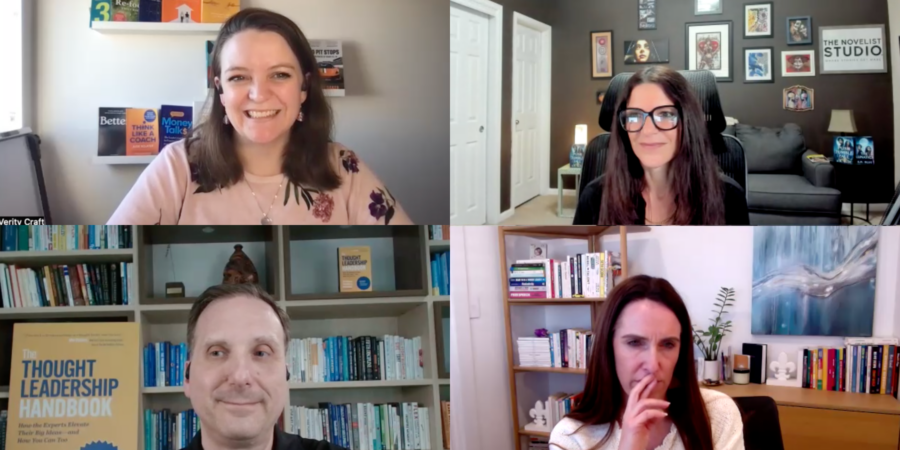
We recently hosted a virtual fireside chat centred around a question that almost every author is asking their editor right now: Should I be using AI to write a book?
It’s a tricky time to be a writer. One school of thought says AI sets you up to sound bland, inauthentic, and miss out on all the goodness that comes with the writing process. But others argue that ignoring AI will set you back and cost you twice the amount of time to get to the same result. So, who do you listen to?
If you’ve been following us over the last few years, you’ll know that at Intelligent Ink, we’re not the biggest fans of AI as a writing tool. But we know there are many other (very successful, very smart!) book professionals out there who feel differently. So, it was about time we sat down with a couple of them and debated it out.
As expected when bringing together differing voices, opinions ran the full spectrum. But there was one area we all agreed on:
AI is a terrible writer. But that doesn’t mean it can’t make you a better one.
Don’t give AI the pen
We can all tell when we’re reading something written by AI. Even when you strip out all the em dashes and tacky metaphors, there’s still something deeply unsettling about AI prose. You can just feel it – or, perhaps, not feel it. The writing is hollow. And sidenote: editing life into a bot’s perspective takes more editing work than most people are willing to put in.
Even Ana del Valle (Founder of Storygroove.ai, and a massive advocate for AI tools) agrees: AI cannot replicate human expression. In fact, it’s not even worth trying to get it to generate.
And even worse? The second you have AI write, re-write or edit your text, it strips away your copyright protection. Copyright exists to protect human work, not machine-generated text – so any outputs you use that come from Claude or Gemini or Chat aren’t actually yours to own!
Use AI for inputs, not outputs
So, where can you bring AI into the process, and still protect your copyright?
Ana suggests using AI for the planning and organizing process. She shared a story of one of her clients, a truck driver who had spent years dreaming about publishing his idea for a fantasy story. But he struggled with structure, and couldn’t justify the costs of hiring an editor. Using AI purely as an interactive craft coach, he was able to map out a detailed 30-chapter outline. From there, he wrote every word. That way, he retained all the copyright, and the manuscript was all his. (As a slight disclaimer, we still think that if you’re writing a book to build thought leadership and get your ideas out there then it’s vitally important that you, the human, create your own strategy and structure – find out more about one way you can do that here.)
Bill Sherman, CEO of Thought Leadership Leverage, had a slightly different take. It came out of his own authorship journey, when he set out to turn six years of podcast recordings into The Thought Leadership Handbook. He started with 650 podcast transcripts totalling roughly 2.6 million words. But instead of manually sifting through all that material, Bill used AI as his ‘analytical assistant’ to search across the transcripts, identify core themes, and pull relevant content together.
The AI didn’t write the book, but without AI, Bill says the book wouldn’t have been possible. His advice? Think about what AI can do to help you as the author, but don’t be tempted to replace authorship with a robot entirely.
Our take: experiment all you want, but tread carefully
It’s no secret that we’re quite critical of AI. We’ve seen authors sell themselves short by plugging their ideas into AI and coming out with a manuscript that doesn’t do the complexity of their topics justice. We’re unashamedly dubious that AI belongs in book writing at all.
But it’s almost impossible to ignore that AI can cut the overwhelm of writing and planning for authors. And if it means more big thinkers will be able to share their big ideas with the world through books, then it’s worth understanding and embracing more.
Considering all that we’ve learned from Bill and Ana – and the endless hours of conversation within our team – we’ve got a few parting thoughts about AI to share:
- Let AI help you bring ideas together – but don’t take the main thesis or point directly from a bot. It’s highly unlikely that it’s as clear (or as unique) as it first seems.
- Be very careful not to pull out summaries from your AI tool into your manuscript. We know – it’s tempting! But those pieces of copy-paste text could lose you a publishing deal down the track due to copyright issues.
- Take AI feedback with a grain of salt. It’s a junior assistant, eager to please you – not a senior advisor looking out for your integrity. Feel free to ask it for recommendations, but never forget that your tool is never going to be as smart, as creative, or as human as you are.
And of course, don’t forget that you do not have to use AI at all. It’s there as a tool. And it can easily become a trap. If you’re not into it – our advice is to trust your instinct and stick to the immense power of your own brain.
Writing a book yourself, word by word, without touching an AI model, is just as valid today as it was a century ago. AI is simply an optional tool in your toolbox. Use it intentionally, experiment with caution, or don’t touch it at all.
Want to dive deeper into the conversation? You can check out the full fireside chat recording on YouTube.